
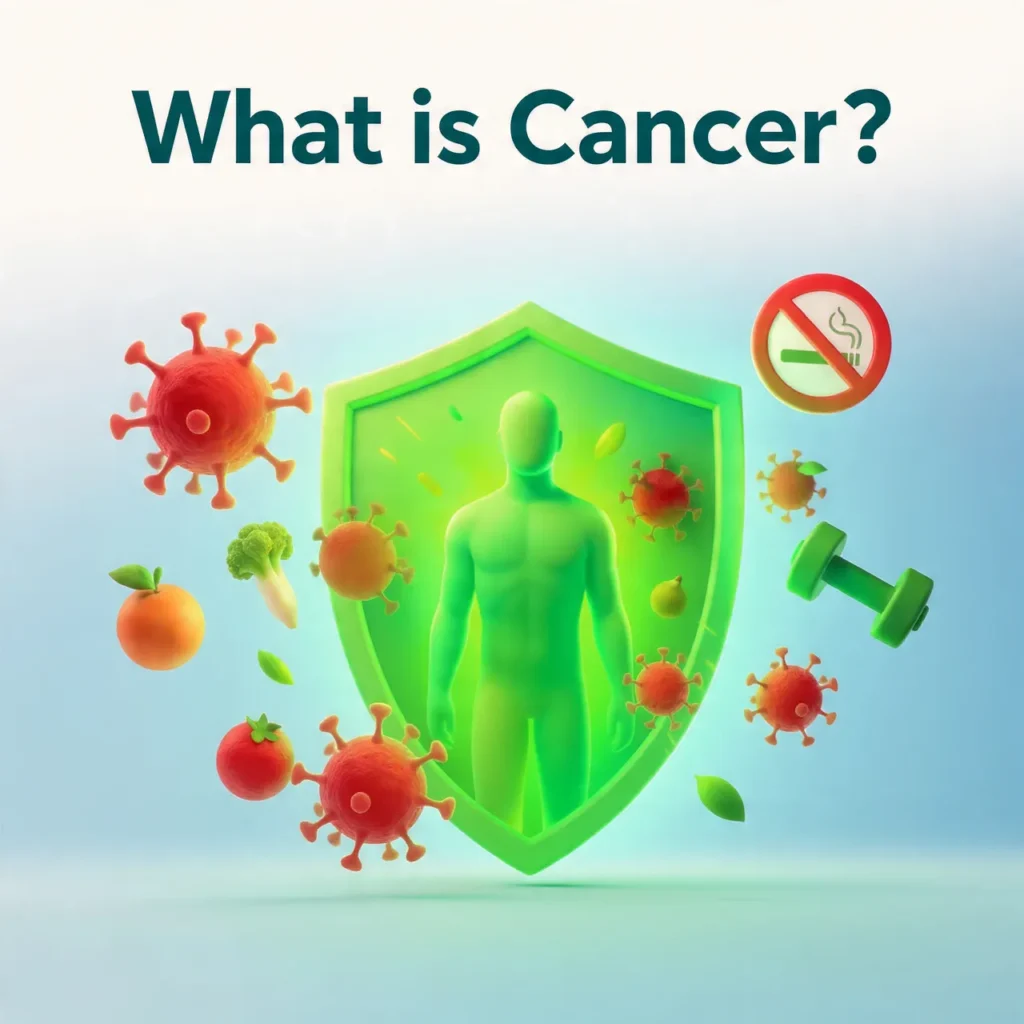
What is cancer? If you ask, most people do not know it; people feel afraid even when they hear the word cancer. The reason behind this is that they are ignorant about cancer. What is cancer? If you ask anyone, you cannot tell. In cancer, abnormal cells in the body start growing. There is no control over them, and they turn into tumors. This tumor is cancer.
This cancer can form anywhere in the body. The place where a cancerous tumor first forms in the body is the primary site. As it grows, it spreads to other parts of the body through the lymphatic system and bloodstream. Which we call metastasis. In this blog, we will look at what is cancer? What causes it, what are its symptoms, and how do you prevent it? And we will understand it in detail and in simple language.
What is Cancer? (Simple Explanation)
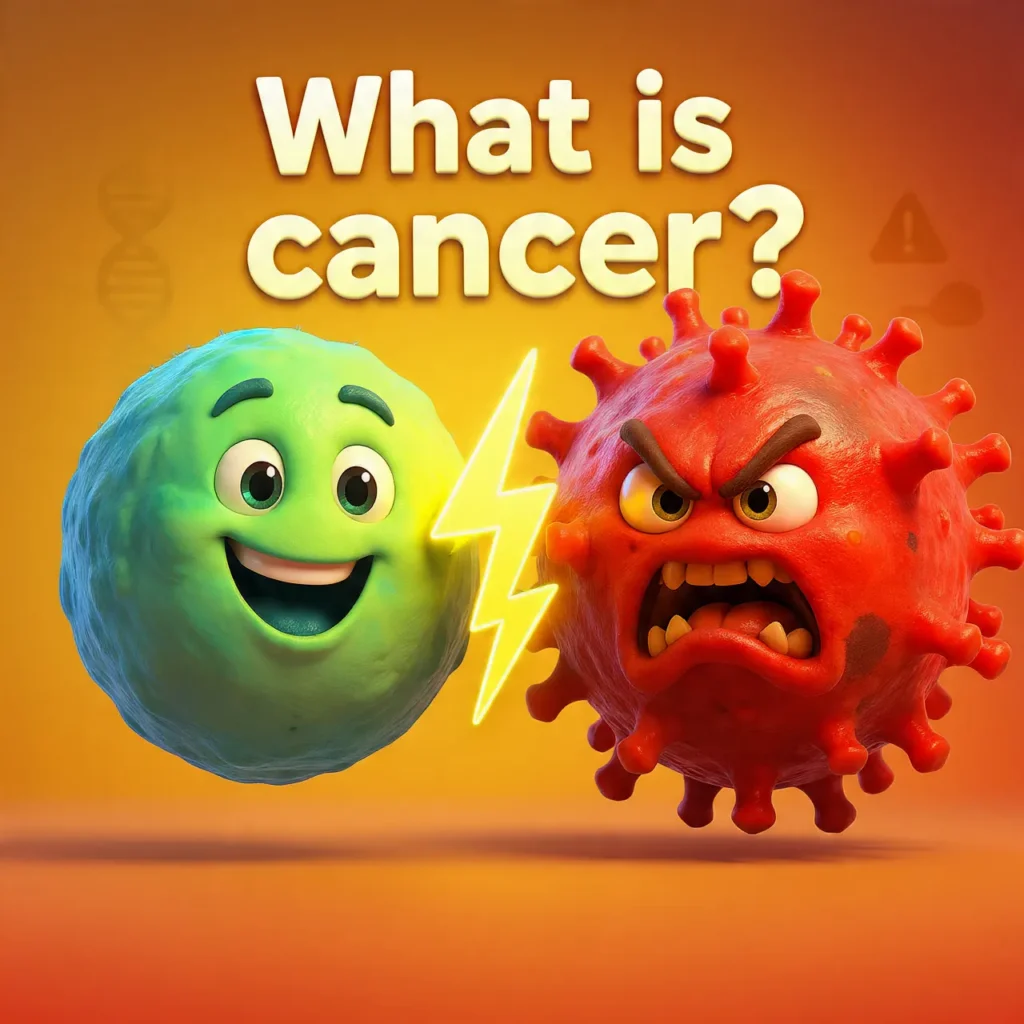
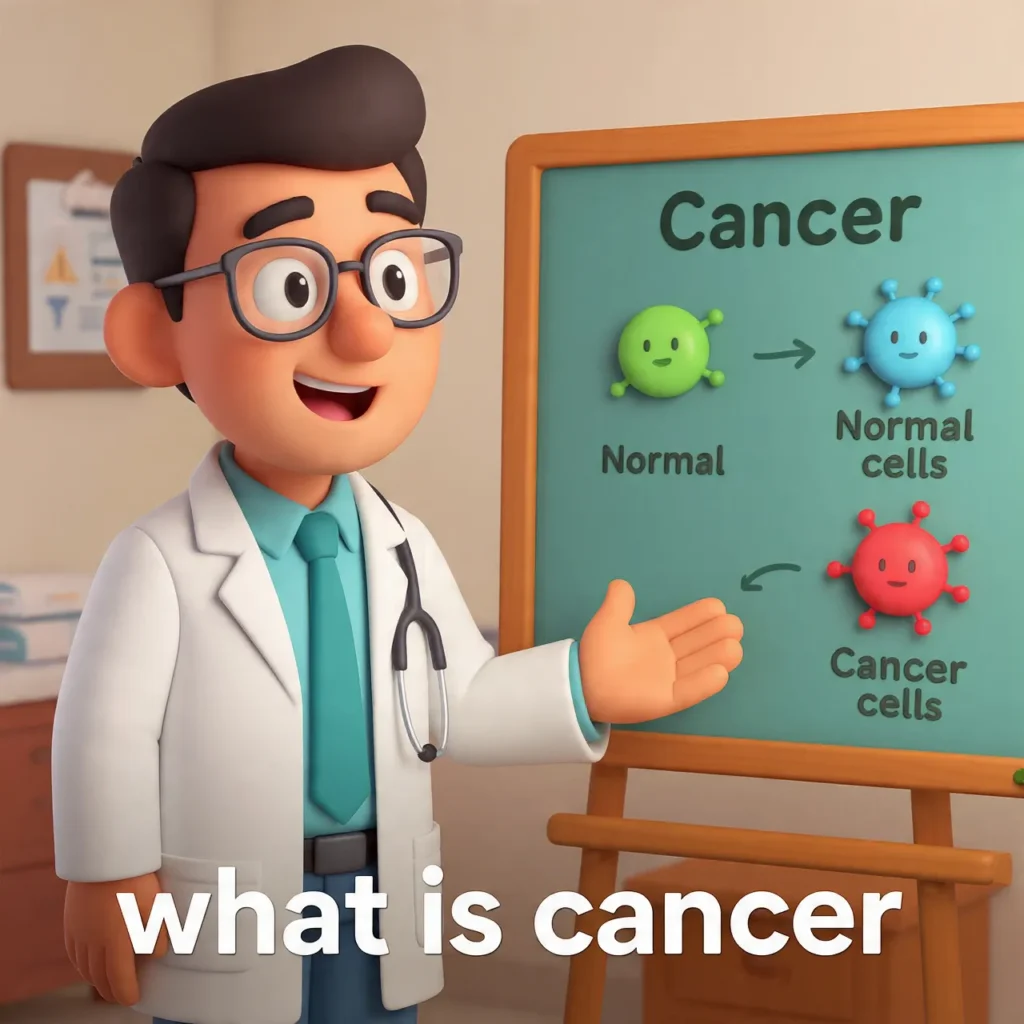
Our body is made up of countless cells. Each cell has a specific life cycle. Just like every cell is formed. Then it grows, and when its function is completed, it dies. Usually, this life cycle of every cell is fixed. We call these normal cells.
But cancer cells are different. These cells do not follow this life cycle. What is meant is that cancer cells are formed and then they grow. This growth is so uncontrolled that it has no limit. They keep growing. Over time, it then transforms into a large tumor. This tumor is what we call cancer. One thing to note here is that cancer cells never die naturally. This is an important difference between normal cells and cancer cells.
1.2 What is Cancer tumor?
A lump formed by the gathering of abnormal cells is called a tumor. Not all tumors are cancer.
1.2.1 Benign Tumors:
This tumor is non-cancerous and does not cause any harmful effects on the body.
1.2.2 Malignant Tumor:
This tumor is cancerous and harms the body.
Let’s see what cancer is. Now let’s learn about what causes this cancer. What are its causes?
2. What is cancer caused by?
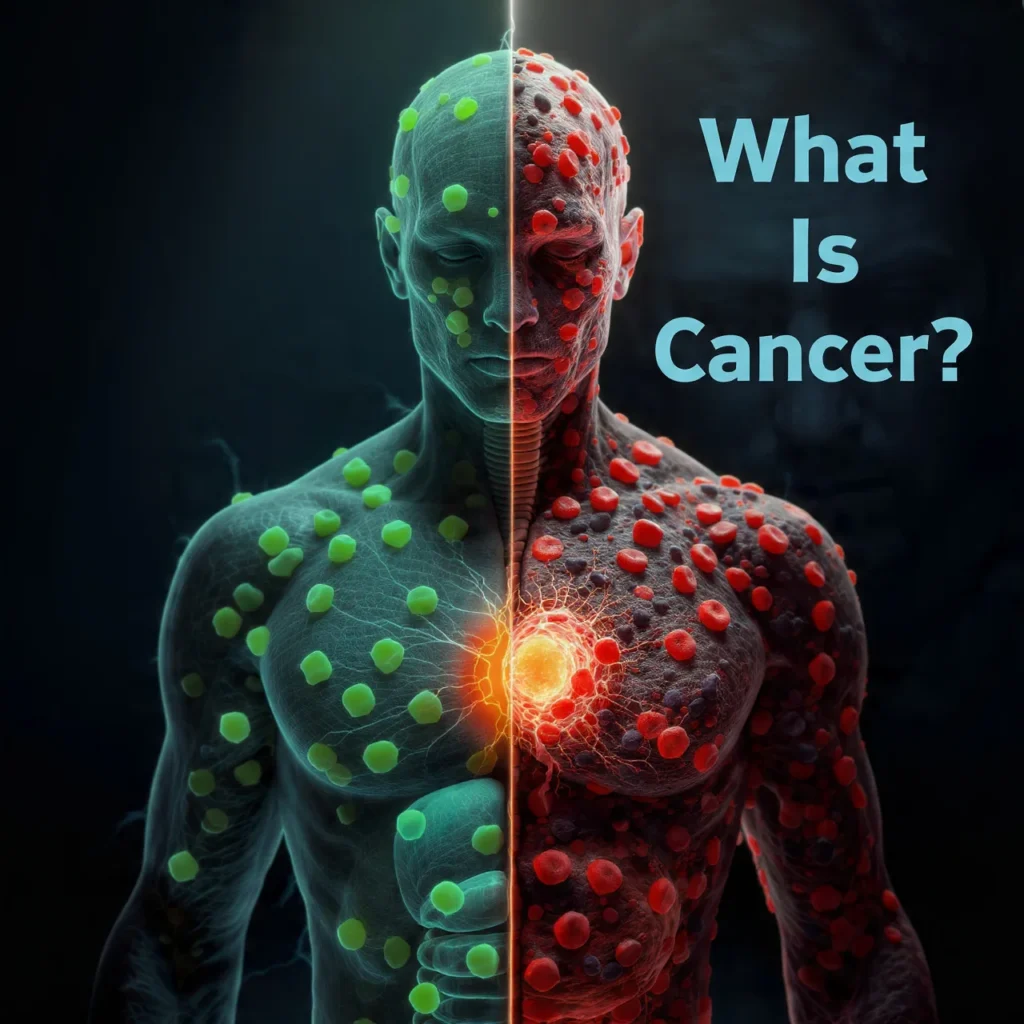
The main cause of cancer is mutation in the DNA in cells. That is, there is a change in the DNA. Many small genes in the DNA become overloaded. These genes give instructions to the cells on what to do. That is how cells are formed. They grow and multiply and spread. There are many other reasons behind cancer. Lifestyle, our environment, genetics, and family history. All these cells come together to form a tumor, which is called cancer.
Cancer can spread to other parts of the body through the lymphatic and blood streams. For example, if you have breast cancer, the cancer cells can spread to the lungs. And the cancer can cause breathing problems. This is called metastasis in medical terms.
2.1 What is cancer caused by daily habits (lifestyle-related causes)?
2.1.1 Smoking and Tobacco: Smoking cigarettes, eating tobacco, and eating pan masala are bad habits. These habits cause oral and lung cancer. Tobacco and cigarettes contain a substance called nicotine. This is a carcinogenic element. This causes cancer and has adverse effects on the body. I have made nutrition care plans for many cancer patients till now. Among them, I noticed that patients who consumed tobacco developed oral cancer.
2.1.2 Alcohol: Alcohol contains a substance called acetaldehyde. This byproduct causes mutations in DNA and causes cancer. Excessive alcohol consumption causes liver, breast, and throat cancer. Alcohol disrupts the balance of hormones called estrogen and insulin in our bodies. These hormones cause cells to divide uncontrollably and produce more cancer cells. This process leads to the formation of cancer cells and has a harmful effect on the body.
2.1.3 Unhealthy Diet: Consuming oily, spicy, and junk food in the diet. Including a diet that does not contain any nutrients weakens the immune system in the body. The body cannot resist any disease. Cancer cells grow rapidly in such a body.
2.1.4 Lack of Exercise: Not doing any physical activity, such as walking, cycling, or running. Not exercising. Sitting for a long time. Sitting jobs cause weight gain. The balance of hormones like estrogen and insulin in the body is disturbed. All these things are very conducive to the growth of tumors and increase the risk of cancer.
2.2 What is cancer caused by environmental and health-related Causes
If you have been living in an environment with polluted air, water, and soil for a long time. Then you are at a very high risk of getting cancer. Polluted air, particulate matter (PM 2.5), asbestos, and dust particles cause lung cancer. Industrial waste mixed in polluted water can cause kidney cancer.
Prolonged exposure to X-rays, CT scans, and radiation can damage DNA. This increases the risk of skin cancer. Various infections, such as hepatitis B/C, HPV, and H. pylori, can lead to cervical cancer if left untreated.
More information is available on what is cancer? ICMR: https://www.icmr.gov.in
2.3 What is cancer caused by heredity and family history?
Heredity is also a major cause of cancer. Mutated genes are passed from parents to children. They are at increased risk of developing cancer. About 5 to 10% of cancers are hereditary. If anyone in the family or among relatives has had cancer. Then the chances of developing cancer increase. It is very important to go for regular checkups. Follow a good lifestyle, a proper diet, and exercise.
3. What is cancer, and what are the types of cancer?
Cancer can occur anywhere in our body. Its symptoms are determined according to the type of cancer. Now we will look at the types of cancer.
Cancer is classified according to the cells and tissues it affects. Let us understand what this means with an example. There are some main types of cancer. In which carcinoma occurs in the skin and organ lining, and sarcoma occurs in the bone and soft tissue. Leukaemias occur in the blood and bone marrow; lymphoma occurs in the immune system. Now, let us understand the types of cancer according to the body organ.
3.1 What is cancer by body organ?
3.1.1 Breast Cancer: This type of cancer is more common in women. The cause of this cancer is a hormonal imbalance. Also, family history or heredity is considered to be the main cause of breast cancer.
3.1.2 Cervical Cancer: This type of cancer is seen in young women. This cancer is caused by infection with the human papillomavirus. For this, if a Pap smear test is done, it can be diagnosed early. And appropriate treatment can also be given. HPV vaccination is also available for this.
3.1.3 Lung Cancer: This cancer, which occurs in men, is caused by smoking and polluted air. The death rate from this type of cancer is very high.
3.1.4 Oral Cancer: Oral cancer is mainly caused by excessive consumption of tobacco and paan masala. It is also caused by smoking. In all these products, a dangerous substance called nicotine is present. Which mixes with the saliva in our mouth and causes cancer.
3.1.5 Bowel Cancer: Consuming low-fibre foods like junk food, pizza, and burgers in your diet daily. This can damage your digestive system. These foods clog your stomach and intestines. They produce toxins. Over time, they can lead to stomach cancer and colon cancer.
3.1.6 Prostate Cancer: This type of cancer is mainly seen in adult men. It is caused by hormonal imbalances that cause uncontrolled cell growth.
3.2 What is cancer caused by blood-related cancers?
3.2.1 Leukemia: White blood cells are very important in our immune system. Leukemia cancer occurs when these white blood cells start to grow. They grow uncontrollably in the bone marrow.
3.2.2 Lymphoma: The lymphatic system is an important part of our body’s immune system. When tumors start forming in the lymph nodes, this lymphoma cancer occurs.
3.2.3 Multiple Myeloma: The blood that flows through our body contains plasma cells. Multiple myeloma affects plasma cells. And our immune system is reduced.
3.3 What is cancer stage 0 to 4
There are stages of cancer. It is very important for us to understand them. The stage of cancer tells us where the cancer is in the body and how far it has spread. This is very important. It is very important for us to know the stage of cancer for proper treatment.
Cancerous tumors are classified into stages 0 to 4.
3.3.1 Stage 0 (Carcinoma in Situ): At this stage, the cells are abnormal but have not yet spread. This is called the pre-cancer stage. Cancer can be treated at this stage.
3.3.2 Stage I: In this stage, the cancer appears to be small and has spread to the surrounding areas of the body.
3.3.3 Stage II & III: In this stage, the cancerous tumor has grown and spread to surrounding tissues and lymph nodes.
3.3.4 Stage IV: At this stage, the cancer has metastasized. This means that the cancer has spread beyond the organs where it first started. Such as mouth cancer, to other organs through the blood vessels and lymphatic system. Such as the lungs, liver, and bones.
What is cancer, and what are the symptoms of cancer?
The symptoms of cancer depend mainly on the location of the cancer in the body and its type. Yet, the following are common symptoms that are seen in cancer patients.
Persistent Cough or Hoarseness: A cough that doesn’t go away.
Unexplained Weight Loss: Rapid loss of body weight.
Persistent Fatigue: Patients get very tired. The fatigue doesn’t go away even after resting.
Fever and Night Sweats: There is excessive fever and sweating at night.
Unusual Lumps/Swelling: Tumors can form anywhere in the body, in various parts.
Skin Changes: There are some common changes in the skin, such as skin color and skin shape changes.
Chronic Pain: There is a lot of pain.
Changes in Bowel/Bladder Habits: Constipation, difficulty urinating, and frequent bowel movements.
Unusual Bleeding/Bruising: Excessive bleeding, bleeding in the urine, and coughing up blood.
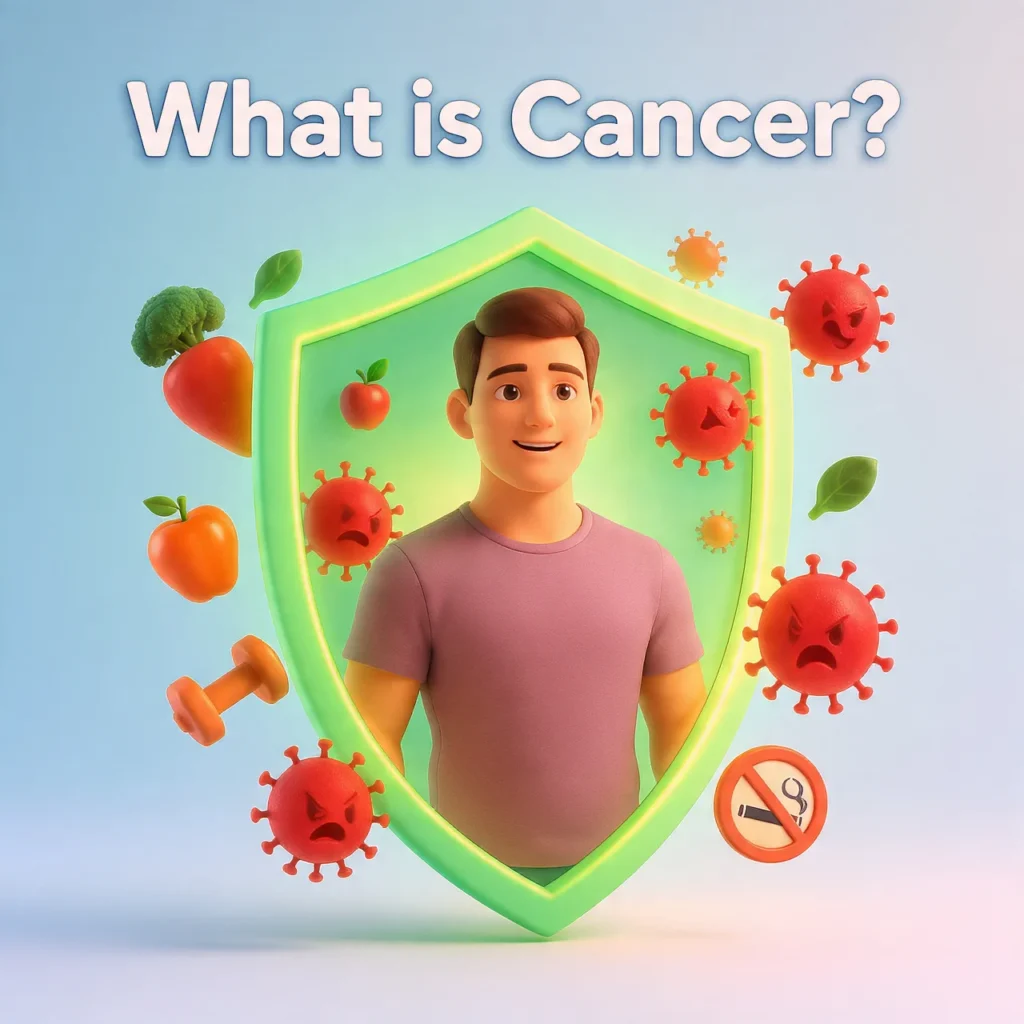
What is cancer, and how do you prevent cancer?
Once we understand what cancer is, we understand how to prevent it. But there is no permanent way to prevent cancer. Cancer experts say that 30 to 50% of cancers can be prevented. By detecting cancer in its early stages, we can make appropriate changes in our lifestyle.
5.1 What is cancer prevention by primary lifestyle habits?
5.1.1 Don’t Use Tobacco: One thing you can do to prevent cancer is not smoke. Not smoking or using tobacco in any form. Whether it is cigarettes, chewing tobacco, or smoking paan masala. If you can do this, you can greatly reduce your risk of cancer.
5.1.2 Maintain a Healthy Weight: We know that obesity invites various diseases in the body. Such as diabetes, liver disease, and hormone imbalance. Obesity causes 13 different types of cancer. Including breast, colon, stomach, and kidney cancer. For this reason, it is very important to control weight.
5.1.3 Exercise Regularly: Regular exercise is very important. Every week, you should do 150 minutes of any moderate exercise. Such as walking, running, cycling, aerobics, and yoga. Up to 75 minutes of any heavy exercise. Such as strength training or weight lifting is expected.
5.1.4 Eat a Plant-Forward Diet: It is very important to eat a balanced diet. It is very important to follow a healthy diet. You can always include fruits, vegetables, cereals, pulses, and dry fruits in the diet. The amount of oily, spicy foods and junk food should be less in the diet.
5.1.5 Limit Alcohol: Not drinking alcohol is very beneficial for health. By not drinking alcohol in any form, we can stay free from seven different types of cancer. So, alcohol should be avoided.
5.1.6 Protect Your Skin: Protecting the skin from the sun’s UV rays is very important. For this, use SPF 30 plus sunscreen. Staying in the sun for a long time causes skin cancer. So, it is important to take special care between 10 am and 4 pm.
For more information, on what is cancer? see: https://www.cancer.gov
Conclusion
Understanding what is cancer? its winning half the battle. With the right information, awareness, and professional guidance, cancer can be controlled. Thanks to early diagnosis, advanced treatments, and nutritious diets, many cancer survivors are living normal lives.
For Information Do follow us on https://rnplanet.in/
Frequently Asked Questions (FAQ)
1) What is cancer, and can it be cured?
What is cancer? To answer this question in simple terms. It is nothing but a mutation (change) of DNA within the cell. Where many genes get loaded into it, each gene carries a set of instructions. This tells the cell how to reproduce, grow, and divide to multiply in an uncontrollable manner. These cells together form a tumor, which is said to be cancer. Cancer in its early stages is curable and can be controlled with treatment.
2) Does cancer only affect the elderly?
It is common to say that cancer only affects elderly people. But in reality, cancer can affect anyone at any age. Nowadays, most of the younger ones are also diagnosed with it.
3) What is cancer lumps? Are all the lumps cancerous?
A big myth we often hear is that all the lumps are cancerous. No, it’s not true. Many of the lumps are benign in nature. Non-cancerous. Just as a preventive measure, it is advisable to check with your practitioner. If any lump persists for more than two weeks. No. Many lumps are harmless. But if you find any lump, you should consult a doctor.
4) What is cancer prevention?
Cancer cannot be totally prevented. There is no guarantee of it. As per cancer experts, follow a healthy lifestyle. Taking proper nutrition, avoiding tobacco use, and getting regular checkups reduces the risk.
5) What is cancer nutrition care? Why is nutrition important for cancer patients?
Cancer treatments are there to treat cancer patients, but they do have side effects. To sustain those treatments well enough, you need to have strong immunity. Most of the cancer patients have no idea how to manage nutrition. Nutrition during or after the treatment is important. Doctors can treat the patient, but the nutritional part is mostly overlooked. Every individual has different symptoms of cancer. If the patient gets proper nutrition, then the nutrition strengthens the immune system. Increases tolerance to treatment and helps in faster recovery.